
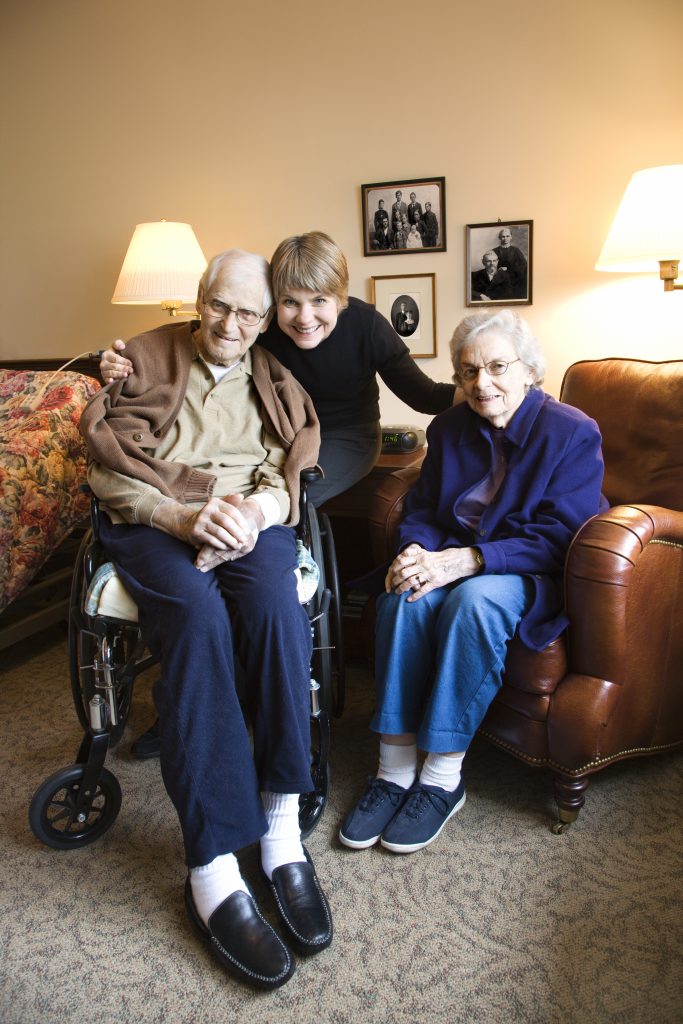
The average life expectancy of someone living in the United States has nearly doubled since the turn of the 20th century. Today, we can expect our parents and grandparents to live well into their 80s and beyond. While this means we can enjoy our older loved ones for much longer, it also increases the odds that you will someday be responsible for caring for a parent who is suffering from physical and/or mental incapacity. At some point, you may be faced with the fact that your parent has become unable to safely care for himself/herself without assistance. The only viable solution may be to petition for guardianship over your parent. Making the decision is often a heart-wrenching process as it may feel as though you are taking away your parent’s freedom and independence. Failing to act, however, may result in your parent suffering serious injury or becoming the victim of predators who prey on the elderly. To give you some idea of what to expect from the guardianship process, the Port St. Lucie elder law attorneys at Kulas Crawford & Smith explain guardianship basics.
What Is Adult Guardianship?
Guardianship is a legal relationship wherein a surrogate decision-maker is appointed by the court to make either personal and/or financial decisions for a minor or for an adult with mental or physical disabilities. When the proposed ward (incapacitated person) is an adult, guardianship is the process by which the court finds an individual’s ability to make decisions so impaired that the court gives the right to make decisions to another person. By law, a court can only grant guardianship when other, less restrictive, means are insufficient to protect the ward. The State of Florida offers both voluntary and involuntary guardianships. A voluntary guardianship may be established with the consent of the ward while the ward is still capable of making his/her own decisions and caring for himself/herself. An involuntary guardianship requires a court finding of necessity after a lengthy judicial process.
Types of Guardianship in Florida
Each state determines what types of guardianship are available and the extent of the authority a Guardian may exercise. In the State of Florida, there are three primary types of guardianship:
- Guardian of the person. A Guardian of the person would be legally authorized to make decisions relating to personal matters and daily tasks involving the Ward. Some common decisions a guardian might make include, but are not limited to, the following:
- Where the ward will live.
- Which physician will treat the ward.
- Whether or not the ward continues to be allowed to drive.
- Who may have contact with the Ward
- Guardian of the estate. As Guardian of the estate, you would be legally authorized to make decisions relating to the estate and finances of the Ward. For example, you might be able to decide:
- Whether or not to sell an asset
- Which bills to pay
- Whether to purchase stocks or other securities with the ward’s investment account
- Whether to enter into a contract in the Ward’s name
- Guardian of the person and estate. A Guardian of the person and estate would have the powers granted to both a Guardian of the person and a Guardian of the estate
In addition to the three primary types of guardianship, there are two other distinctions that are important. If you are appointed as any of the three types of Guardian, the court will also have to decide if you are granted a limited guardianship or a plenary guardianship. A limited guardianship is granted if the court decides that the Ward lacks the ability to do some, but not, tasks associated with that type of guardianship. A plenary guardianship means the court will grant you the power to exercise all delegable legal rights and powers over the adult ward after the court makes a finding of incapacity.
Petitioning for Guardianship
Petitioning for guardianship can be an emotionally stressful, and legally complex task – particularly if anyone opposes the guardianship and/or your appointment as Guardian. To ensure that the process proceeds as smoothly as possible, be sure to consult with an experienced Florida elder law attorney as soon as the need for guardianship surfaces.
Contact Port St. Lucie Elder Law Attorneys
For more information, please join us for an upcoming FREE seminar. If you have additional questions or concerns regarding guardianship in Port St. Lucie, or you wish to get started on a petition, contact the experienced Port St. Lucie elder law attorneys at Kulas Crawford & Smith by calling (772) 398-0720 to schedule an appointment.

- Asset Protection Mistakes That Could Put Your Florida Estate at Risk - September 16, 2026
- Choosing the Right Type of Will for Your Florida Estate Plan - September 2, 2026
- What You Need to Know about Trust Administration in Florida - August 26, 2026